

Why distinguishing a clog from a broken sewer pipe is critical
When an interior plumbing fixture drains sluggishly or water begins to pool around your ankles in the shower, the instinctive homeowner response is to reach for a rubber plunger or pour a bottle of chemical drain cleaner into the drain. If the obstruction is simply an accumulation of soap scum and hair lodged in an isolated 1.5-inch P-trap directly beneath the bathroom sink, mechanical clearing or plunging provides a quick and permanent resolution. However, when the underlying malfunction originates six to ten feet beneath your front lawn inside a 4-inch or 6-inch underground sewer service lateral, standard home remedies fail completely. A broken, sheared, or offset pipe is a severe structural failure, not a simple biological obstruction. Continuing to pour corrosive chemicals or repeatedly snaking a fractured pipe not only wastes hundreds of dollars, but it also accelerates soil erosion beneath your foundation, widens pipe fractures, and allows gallons of hazardous, pathogenic blackwater to exfiltrate into the surrounding Colorado subsoil.
Six undeniable warning signs that indicate a broken sewer line
While an isolated clog affects only the fixture directly above it, a structural compromise in your main underground sewer lateral produces distinct, whole-house hydraulic and geotechnical symptoms that cannot be duplicated by normal drain blockages:
1. Simultaneous multi-fixture backups across the lowest level of the home
In modern multi-story residential plumbing systems, all vertical waste stacks converge into a single horizontal building drain beneath the concrete basement floor slab. When that main exterior lateral breaks or collapses, waste discharge has nowhere to go. When you flush an upper-level toilet or drain a second-floor bathtub, the volume of water rushes down the stack and immediately seeks the path of least physical resistance. Because the basement floor drain, basement shower pan, or laundry utility basin sits at the lowest physical elevation in the structure, raw sewage bubbles up through those lower fixtures simultaneously. If using water anywhere upstairs immediately triggers a backup in your basement floor drain, your exterior sewer lateral is obstructed or collapsed.
2. Unexplained soggy, lush green depressions across your front yard
Colorado is renowned for its semi-arid climate, where residential lawns require consistent supplemental irrigation to remain green throughout the summer. If you discover a localized strip of dark green, extraordinarily vigorous turf, or if your shoes sink into a spongy, foul-smelling muddy depression during a stretch of hot, dry weather, your underground sewer lateral has likely suffered a major fracture. Subsurface sewage exfiltration acts as an aggressive, continuous liquid fertilizer. As raw wastewater leaks through cracked vitrified clay joints or crushed pipe walls, it saturates the soil from underneath, creating surface depressions and sinkholes as escaping water washes away surrounding bedding material.
3. Persistent sewer gas odors inside basements, crawlspaces, and exterior perimeter walls
Under standard International Plumbing Code (IPC) regulations, a properly functioning drainage system is fully sealed and airtight. All noxious sewer gases—predominantly hydrogen sulfide and methane—are drafted safely upward through rooftop atmospheric plumbing vents. Water held in plumbing P-traps forms a physical liquid seal preventing gases from entering living areas. If you continuously smell a pungent rotten-egg odor inside your basement mechanical room, near crawlspace vents, or along exterior foundation walls, that seal has been broken underground. Underground pipe cracks allow sewer gases to migrate through surrounding porous soils and seep through foundation concrete cracks into the home.
4. Chronic recurring clogs within two to four weeks of mechanical cable snaking
A standard sewer clog caused by excess toilet paper or organic matter should stay resolved for months or years after professional cable augering. However, if you hire a drain clearing service to snake your line and wastewater backs up again two to four weeks later, your pipe is suffering from an active structural defect. When vitrified clay joints shift or pipe walls crack, tree roots penetrate the opening with incredible speed, while displaced pipe edges form an immovable physical dam that catches solids immediately upon re-use.
5. Visible foundation wall cracks, basement slab heaving, or masonry settlement
A cracked sewer lateral leaking dozens of gallons of warm wastewater daily directly adjacent to a residential foundation drastically alters local soil mechanics. In the Denver metropolitan area, where foundation soils are rich in moisture-sensitive smectite clay, continuous underground sewage leakage causes localized, violent soil expansion. This upward heave exerts intense pressure against basement concrete slabs, triggering cracking, drywall displacement, sticking interior doors, and structural foundation shifting.
6. Sunken pavers, indented asphalt driveways, or sidewalk voids
As sewage leaks outward through broken pipe sections, it creates a phenomenon known in geotechnical engineering as "soil piping." Escaping water washes fine silt, sands, and gravel backfill into the pipe cavity or disperses it into surrounding soil voids. Over weeks and months, large underground caverns develop above the pipe alignment. Eventually, the overlying concrete sidewalk, asphalt driveway, or flagstone walkway loses its structural support and collapses downward.
Front Range soil mechanics and why sewer pipes break across Littleton
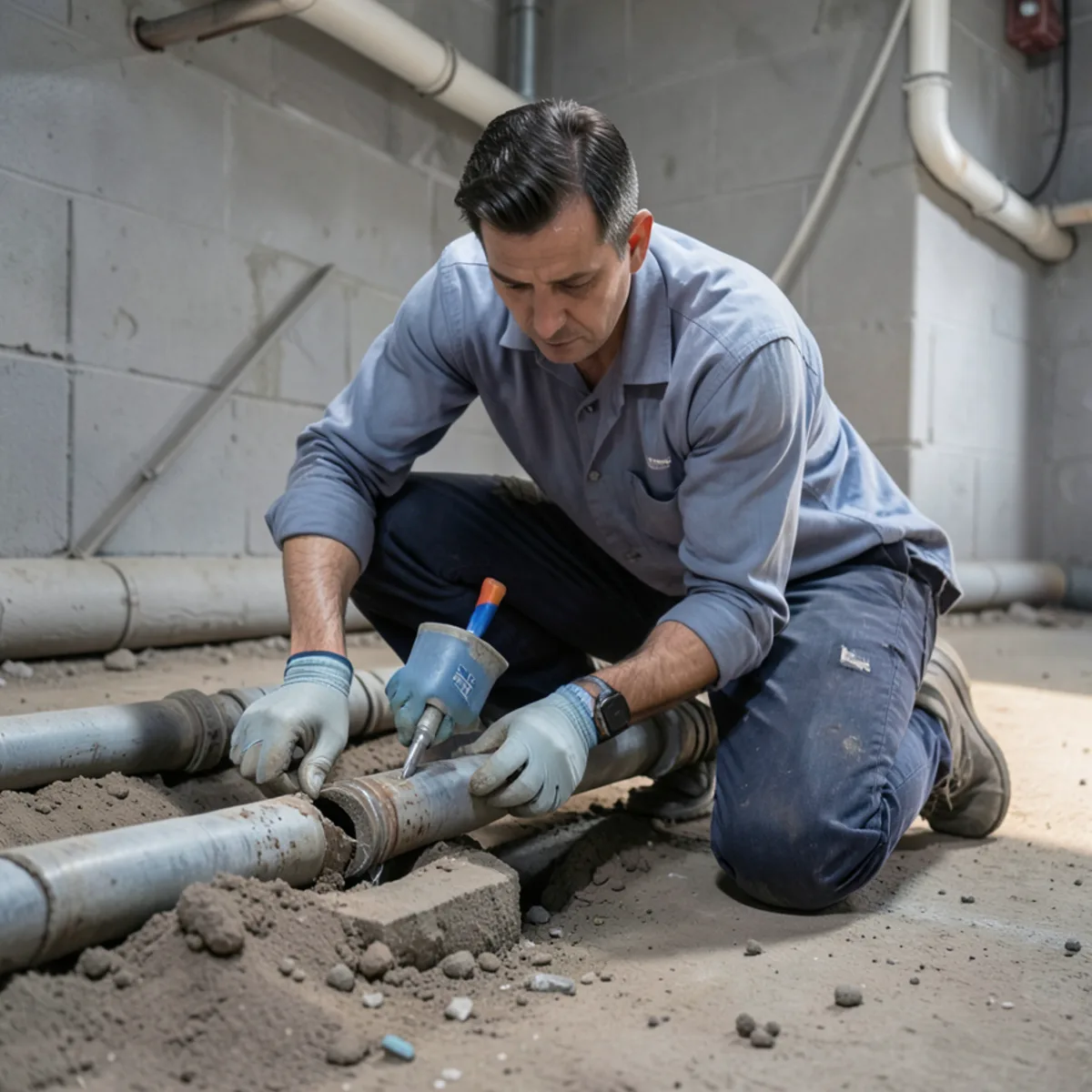
Homeowners in Littleton, Englewood, Lakewood, and throughout Arapahoe, Douglas, and Jefferson Counties face a geological challenge virtually unmatched across the country: highly expansive smectite clay soils derived from the Denver Formation and Dawson Arkose. Geotechnical studies confirm that Front Range clay formations possess extreme shrink-swell plasticity. During spring runoff and snowmelt, groundwater saturates the soil, causing it to expand by as much as 15% to 20% in volume and exerting thousands of pounds of upward hydraulic pressure per square foot. During dry summer and autumn months, the soil loses moisture, shrinks, and pulls away from foundations and buried utility lines. This cyclical ground heave exerts continuous shear stress on rigid sewer laterals. Historic vitrified clay pipes installed throughout the mid-20th century were manufactured in short 3-foot to 5-foot sections connected with rigid cement mortar. Differential soil movement snaps these brittle bell joints like matchsticks, creating severe vertical offsets. In addition, aggressive native shade trees—such as Plains Cottonwoods, American Elms, and Silver Maples—sense the moisture escaping from stressed joints and send invasive root systems directly into the pipe, where they expand and ultimately fracture pipe walls.
How certified CCTV camera inspection confirms the break point
You cannot diagnose an underground sewer failure through surface guesswork or standard drain snaking. The only definitive, indisputable method to determine whether a line is merely clogged or structurally broken is a certified closed-circuit television (CCTV) sewer camera inspection. A licensed Littleton sewer specialist inserts a high-definition, self-leveling optical camera head attached to a rigid fiberglass push cable directly into an exterior two-way cleanout. As the camera travels the length of the lateral to the municipal main collector in the street, an integrated 512 Hz Sonde radio transmitter emits an electromagnetic signal through the ground. The technician follows the signal above ground using a digital receiver, pinpointing the precise location, surface alignment, and exact depth of the pipe within inches. High-definition monitor footage documents exact NASSCO PACP (National Association of Sewer Service Companies Pipeline Assessment Certification Program) defect classifications—distinguishing surface spiderweb cracks from structural shear fractures, collapsed crowns, missing invert sections, and joint separations. Homeowners receive full unedited video recordings and a detailed written engineering report.
Modern trenchless rehabilitation vs. traditional excavation options
Discovering a broken sewer lateral no longer requires devastating your property with open trenching. While traditional open-cut excavation was once the only available method—requiring backhoes to carve a 10-foot-deep trench through lawns, gardens, and concrete driveways—modern trenchless technology provides superior long-term results with minimal surface disruption. If the host pipe maintains basic circular geometry, static pipe bursting can pull a continuous, jointless High-Density Polyethylene (HDPE) pipe directly through the old line, fracturing the broken host pipe outward while drawing a root-proof, 100-year line into place in a single day. For pipes suffering from localized hairline fractures or root intrusion without major ground displacement, Cured-in-Place Pipe (CIPP) epoxy lining creates a seamless, structural pipe-within-a-pipe that completely seals leaks and halts root penetration without any excavation whatsoever.